
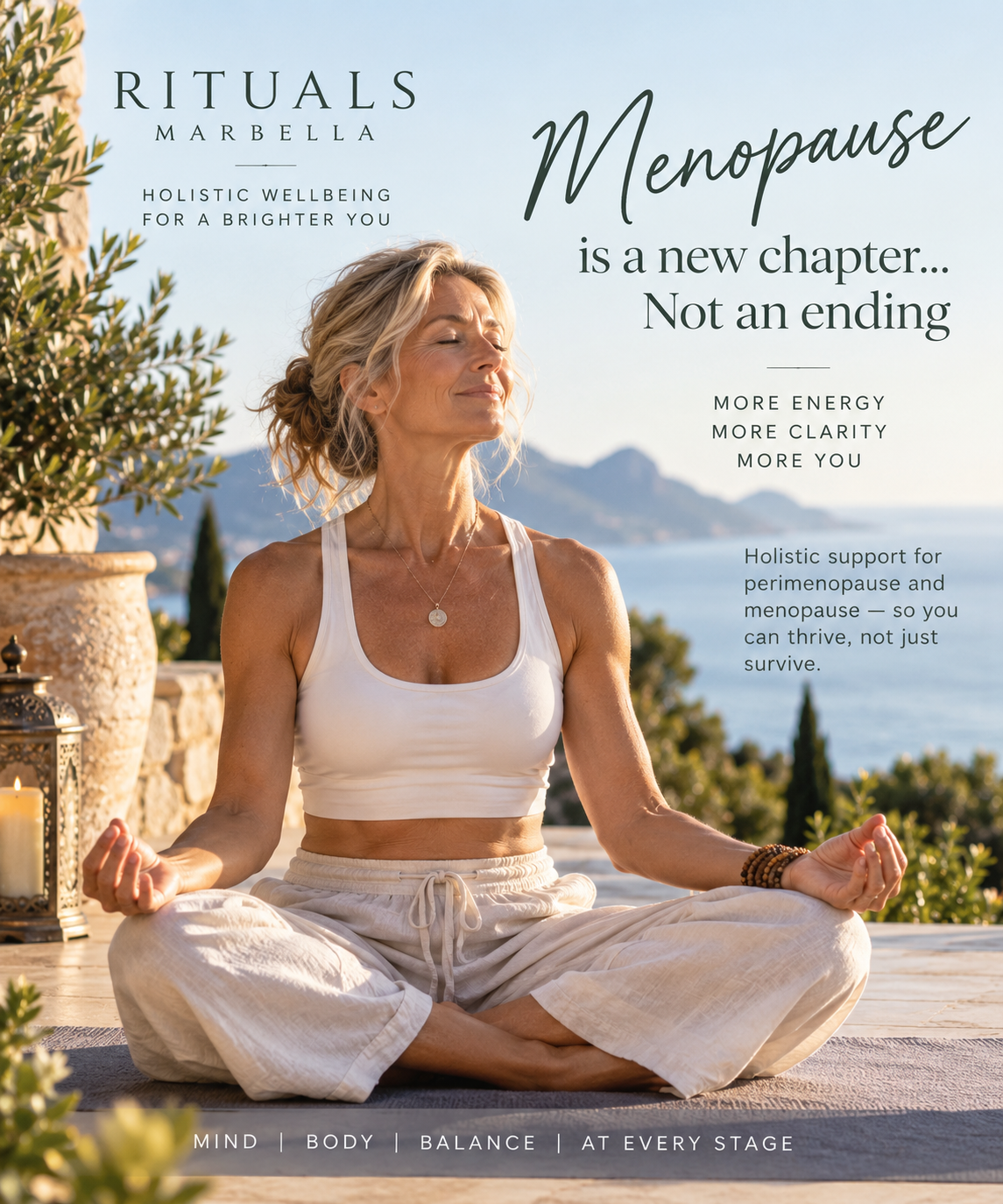
Why I believe every woman deserves a more proactive, informed and holistic approach to health in midlife
Over the past few months, I have been doing something that has completely changed the way I think about women’s health.
Rather than waiting for something to go wrong and then visiting a doctor to treat that individual problem, I have been taking a much broader look at my health.
Blood tests. Women’s health screening. Mammography. Ultrasound. Cardiovascular assessment and a cardiac stress test. Bone health. Body composition and muscle mass. Metabolic health. Hormonal health.
Instead of looking at one symptom or one part of my body, the objective is to create a much more complete picture of me.
Some people describe this type of approach as health optimisation or even “biohacking”. Personally, I think of it much more simply.
Preventive healthcare.
And the more I have experienced it, the more convinced I have become that this is something women should be encouraged to think about much earlier, particularly as we enter perimenopause and menopause.
We should not have to become ill before somebody looks at the whole picture
For generations, healthcare has largely been reactive.
Something hurts. We go to the doctor.
We cannot sleep. We ask for help.
Our cholesterol rises. Our bones become weaker. We gain weight around our middle. We feel anxious, exhausted or unlike ourselves.
Each issue can easily be considered separately.
But a woman in her forties, fifties or sixties is also going through one of the most significant biological transitions of her adult life.
As ovarian hormone production changes through perimenopause and menopause, falling oestrogen and progesterone can influence far more than menstruation. Bone health, body composition, sleep, mood, the genitourinary system and other aspects of health can all be affected. Cardiovascular risk also becomes increasingly important around midlife.
Menopause is therefore not simply about hot flushes.
And it should not be treated as though it is.
What I would like to see change
I would like to see menopause become a routine part of the conversation in women’s healthcare.
When a woman in midlife walks into her doctor’s surgery, her menopausal status should be relevant information.
Is she perimenopausal?
When was her last period?
How is she sleeping?
Has her body composition changed?
What is happening with her blood pressure, cholesterol and blood glucose?
Is she maintaining her muscle?
What is happening to her bones?
How is her mental and emotional wellbeing?
Is she experiencing vaginal or urinary symptoms?
What does her family history tell us?
What screening is appropriate for her age and individual risk?
And, importantly, what can we do now to protect her health in ten, twenty and thirty years’ time?
I am not suggesting that every woman requires an enormous battery of tests simply because she reaches menopause. Healthcare must be individualised. But I do believe every woman deserves a proper midlife health conversation and an opportunity to understand her personal risks.
That distinction matters.
Knowledge gives us choices
For me, empowerment does not mean telling every woman to take HRT.
It means making sure that she understands her options.
Hormone replacement therapy can be extremely effective for menopausal symptoms and can help protect against osteoporosis, but whether it is appropriate depends upon the individual woman, her symptoms, medical history and risk factors. Women should be able to have an informed discussion about its potential benefits and risks with an appropriately qualified healthcare professional.
Equally, women who cannot or do not wish to use HRT deserve evidence-based information about non-hormonal treatments and the lifestyle factors within their control.
There is enormous power in understanding what is happening to our bodies.
Food becomes part of our healthcare
Midlife nutrition is not about punishment, restriction or trying desperately to maintain the body we had at 25.
It is about nourishment.
Protein becomes particularly important as we work to preserve muscle mass and strength. Calcium, vitamin D and an overall nutrient-rich diet matter for bone health. Fibre and a diverse plant-based diet support our gut and metabolic health.
Foods containing naturally occurring phytoestrogens, including soy foods, flaxseed, sesame seeds, lentils and other legumes, can also form part of a healthy diet. They are not a substitute for prescribed oestrogen, but nutrition is one of the tools available to us as we build a lifestyle designed to support healthy ageing.
What we eat in midlife is not merely about our weight.
It is part of how we intend to age.
Muscle is an investment in our future
One of the greatest changes in my own thinking has been the importance I now place on muscle.
For women in midlife, exercise should not simply mean trying to burn calories.
Strength matters.
Resistance training, weight-bearing exercise, walking, mobility and balance work all have roles to play. Maintaining muscle supports strength, function, metabolism and independence as we grow older, while weight-bearing and resistance exercise are important components of protecting our bones.
I want women to think differently about exercise.
We are not exercising because our bodies have failed us.
We are training for the women we want to be at 60, 70, 80 and beyond.
Sleep is not a luxury
Sleep is another area women are extraordinarily good at sacrificing.
We care for children. We care for parents. We work. We organise homes. We carry responsibilities that are visible and countless others that are not.
Then menopause can arrive and make good sleep even more difficult.
Sleep deserves to be treated as a fundamental part of wellbeing rather than the thing we fit in after everything else has been completed.
Our evening routines, light exposure, alcohol consumption, caffeine, movement, stress management and bedroom environment all deserve attention.
Rest is part of the ritual.
Stress belongs in the conversation too
This is where my Ayurvedic background becomes particularly relevant.
Ayurveda has always encouraged us to look at the whole person rather than isolating one symptom from the life in which that symptom is occurring.
How do you eat?
How do you sleep?
How do you move?
How do you digest?
What does your daily routine look like?
What is happening emotionally?
How much stress are you carrying?
Do you ever truly rest?
Modern medicine and Ayurveda come from very different traditions, and Ayurveda should never replace appropriate medical assessment, screening or treatment. But I believe there is enormous value in bringing the principles of lifestyle, routine, nourishment, rest, mindfulness and self-awareness into our approach to midlife health.
For me, this is where the two worlds can complement one another beautifully.
Women are very often looking after everybody except themselves
There is another reason this matters to me.
Women are so often the carers within families.
We look after children, partners, ageing parents, friends and sometimes grandchildren. We organise, remember, nurture and support.
Our wellbeing consequently reaches far beyond ourselves.
I sometimes smile at the old expression “happy wife, happy life”, but there is something deeper behind it.
When I am rested, healthy, emotionally balanced and happy, it affects my relationship with my husband. It affects how I interact with my family. It affects my patience, my energy, my work and what I am able to give to other people.
Looking after ourselves is not selfish.
It allows us to continue participating fully in the lives we have worked so hard to create.
We need to start asking better questions
I want women to become comfortable walking into a healthcare appointment and asking:
What should I be thinking about now that I am in perimenopause or menopause?
What is my cardiovascular risk?
Should we be discussing my bone health?
Am I maintaining enough muscle?
Are my blood pressure, cholesterol and glucose where they should be?
Am I up to date with the screening appropriate for me?
Could some of the symptoms I am experiencing be related to menopause?
What are my options for HRT and non-hormonal treatment?
What can I do with nutrition, exercise, sleep and stress management to protect my future health?
These are not unreasonable questions.
They are responsible ones.
From reactive medicine to proactive health
Perhaps the greatest lesson I have taken from my own recent experience is that I do not want to wait for illness before becoming interested in my health.
I want to understand my body while I am well.
I want to know my baseline.
I want to know where my vulnerabilities might be.
I want to preserve my bones and muscle.
I want to protect my heart.
I want to nourish my brain and my gut.
I want to sleep well.
I want to manage stress rather than simply becoming accustomed to living with it.
And I want to continue learning.
This is what I believe women’s midlife healthcare should increasingly become: proactive rather than reactive, individual rather than generic, and holistic rather than fragmented.
Menopause should not be an afterthought in women’s healthcare.
It should be a conversation.
And that conversation should begin before we find ourselves wondering why our bodies suddenly feel so unfamiliar.
A Ritual for the Next Chapter
At Rituals Marbella, I talk frequently about rituals because the small things we repeatedly do become the architecture of our lives.
A nourishing breakfast.
Protein at each meal.
A morning walk.
Strength training.
Yoga.
Five quiet minutes of breathing.
Going to bed earlier.
Turning off the phone.
Making the medical appointment we have been postponing.
Asking the extra question when something does not feel right.
None of these things alone is the answer.
Together, however, they represent something extraordinarily important.
They represent a woman becoming an active participant in her own health.
My message to every woman entering this stage of life is simple:
Become informed. Ask questions. Know your numbers. Understand your options. Build strength. Protect your sleep. Nourish yourself well. Manage your stress. Attend your screenings. And find healthcare professionals who are prepared to look at the whole woman, not simply the symptom that brought her through the door.
We may be living longer than generations of women before us.
The goal should not simply be more years.
It should be more healthy, strong, independent and joyful years.
And I believe we should expect our healthcare to help us achieve them.
This article reflects my personal experience and my work in women’s wellbeing and Ayurveda. It is intended for education and does not replace individual medical advice, diagnosis or treatment. Screening, investigations and menopause treatments should always be discussed with an appropriately qualified healthcare professional.